

THE NOW OR NEVER EFFECT
In which two honeymooning twenty-somethings hastily acquire a sailboat and point south.

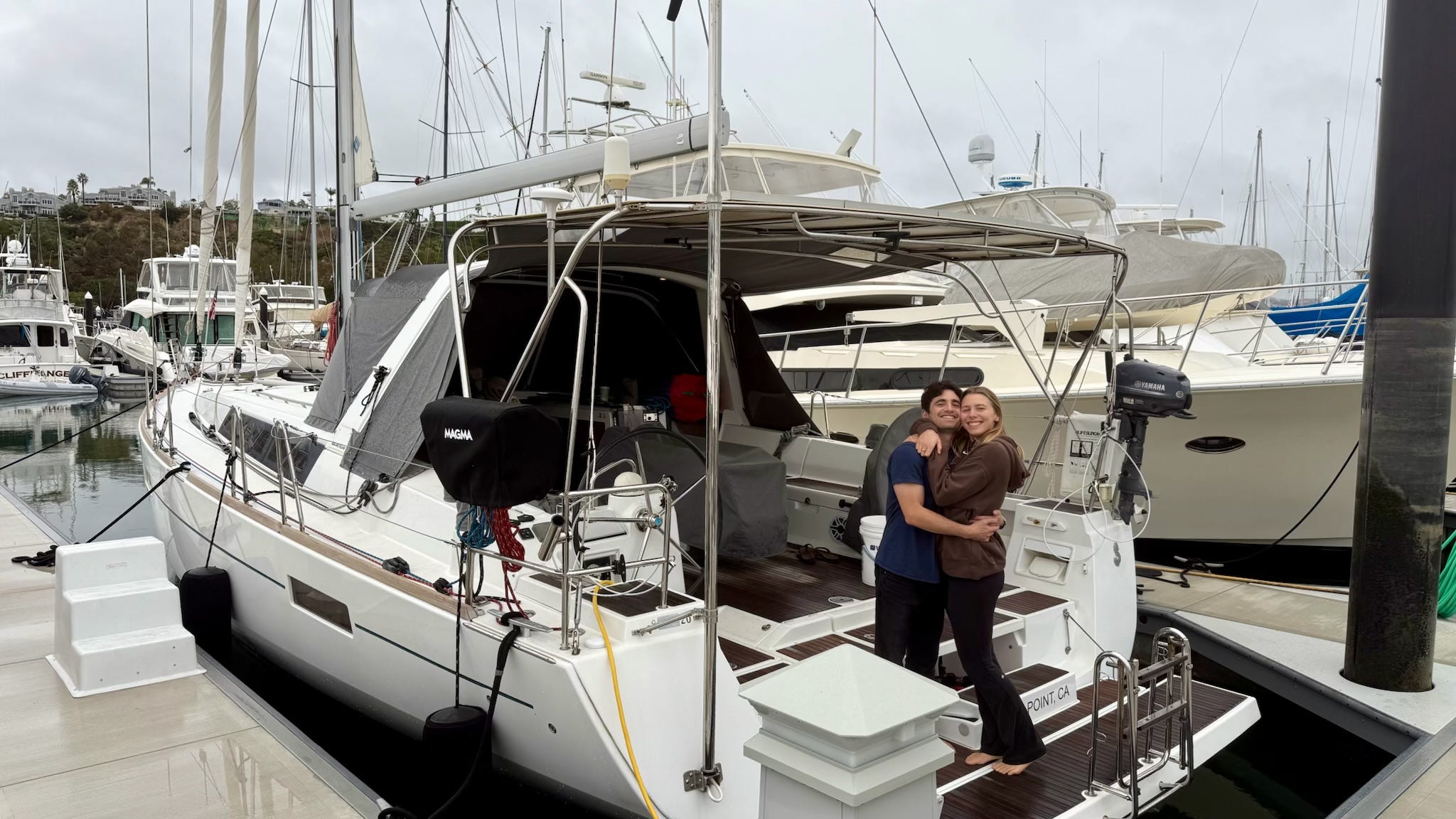
You could prepare for a hundred years to set sail and never be ready. Three new items creep onto your project list for each one you complete. Life gets in the way of your departure date. At some point, you must invent a deadline. You must acknowledge that you won’t have time for another lesson on flying the spinnaker. You must cancel the vague plans you had made for a sendoff ceremony. You must come to terms with the piles of gear arranged haphazardly in every cabin, drawer, and locker, the mess of spare parts hidden under the cushions, the cans rolling around under the floorboards. You must resign to the limitations of life aboard and discover that freedom is to be found within those very limitations, not in spite of them.
I did not arrive gracefully at that conclusion. While Teddy upgraded the plumbing system, repaired the wind generator, resealed the hatches, and became a fixture at the local marine supply store, I fretted about the upcoming voyage without contributing much at all, my focus mired between a rapidly ending present chapter and still-distant future. I collected my final paycheck from my job of four years. I felt prematurely homesick for a home that would no longer be ours. I drowned my anxiety in mai tais at Dana West Yacht Club, a mistake I’ll never make again. I spent the day before our departure undergoing an intense law school scholarship interview process, drove home in a daze, and hung up my suit. Until past midnight, we loaded supplies in and out of our cars, lugging cartfuls of fast-dissolving toilet paper, surfboards, books, fishing equipment, charging cables, dog and human first aid, non-perishable food, and the other contents of our lives across the docks. The deadline had arrived.
When we picked up the dock lines the next morning, Teddy exclaimed over and over, “We’re doing it! We’re doing it!” Ready or not, there was no turning back, and our lives would never be the same.
We crossed the border somewhere north of the Coronado Islands on the morning of March 12. Hardened layers of residual stress gave way to triumph as we hoisted the Mexican flag, its colors cheerful and proud against the crystal blue of the sky. We considered popping champagne but opted for Pacificos instead, delighted at the first words of Spanish coming in over the radio. We were really doing it.
Satori, the name we chose for our sailboat, is a term referring to a sudden sense of clarity—a spontaneous moment of deep insight and knowing, or even enlightenment. We joke that this was the feeling when we decided one night not to delay our dream of cruising. Our lives might never again be this uncomplicated: newlyweds in our late 20s, not yet established in our careers, only a dog to look after. We found a 2014 Beneteau 45 in San Diego that had won the Solo Transpac race to Hawaii and completed two Mexico trips, kitted out for cruising and in beautiful condition. Her history, in a way, made up for what we lacked in experience. Before we could believe it, she was ours. We set our sights on the Sea of Cortez, a glimmering tropical ocean in the majestic Mexican desert, and decided to call this voyage a honeymoon.
There is no “honeymoon phase” in boat ownership. When you acquire a vessel that’s had three prior owners, you may inherit years of their deferred maintenance, encounter the consequences of astonishing risk tolerance, ignorance, or combination thereof, and become acquainted with mysterious problems beyond what even the most thorough inspections and sea trials could uncover. Among other surprises, we found a bullet casing in the bilge that could raise questions south of the border. We discovered that, due to an absence of fuses, wires went unprotected and could catch fire. We found paperwork discrepancies that would jeopardize our ability to leave the country if not handled by the last owner, who was not especially eager to take our calls.
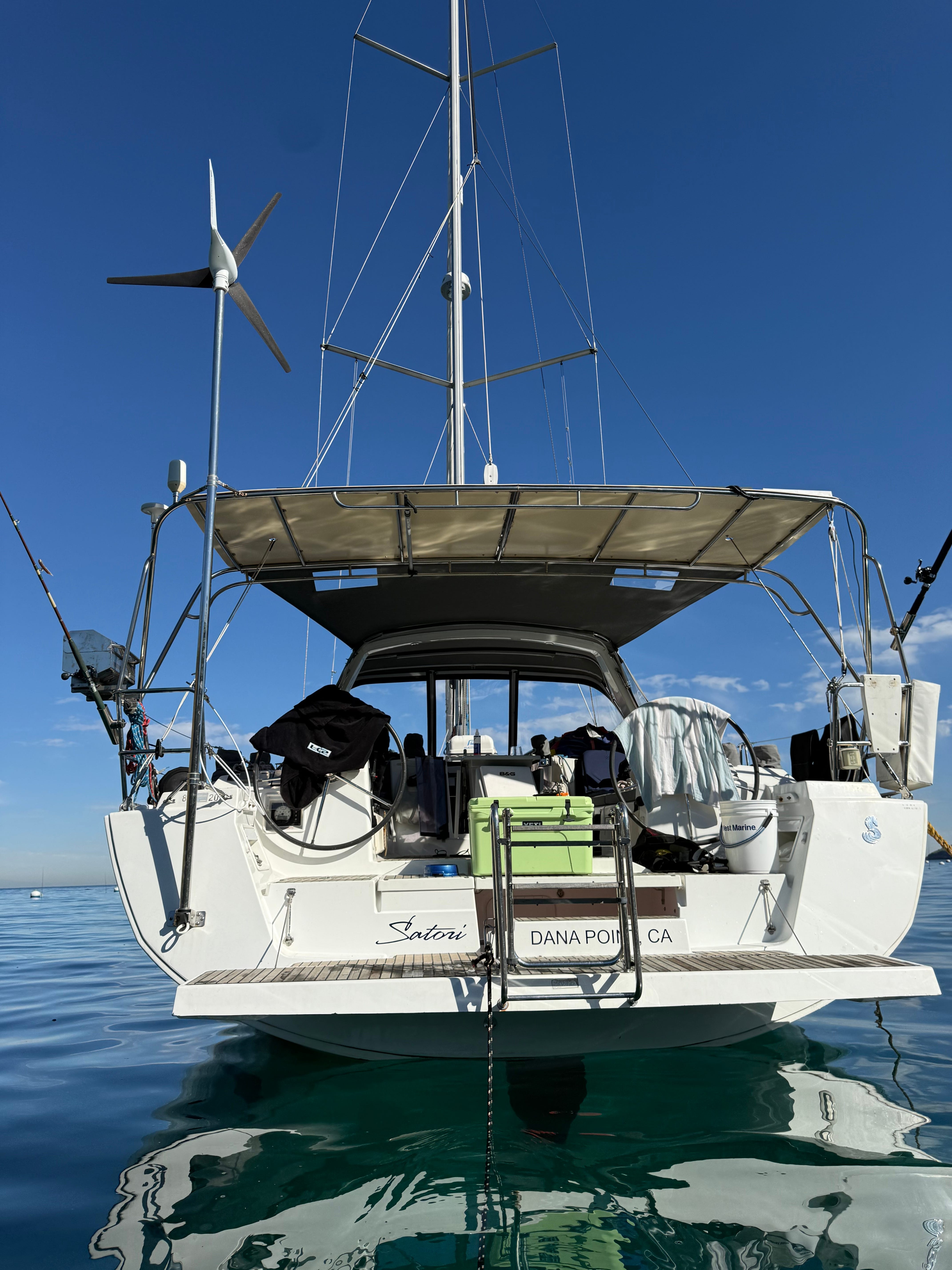
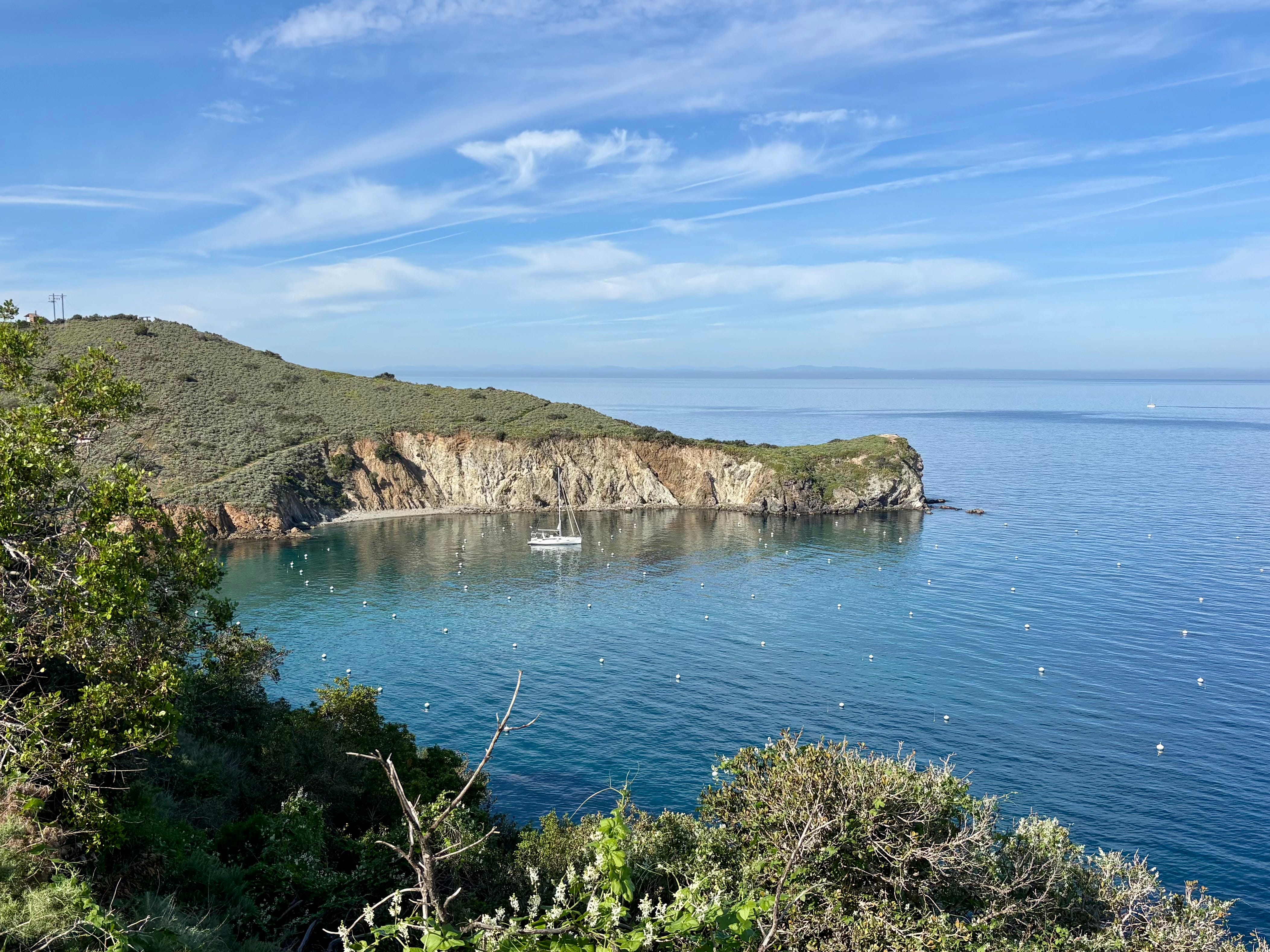
Satori didn’t leave her slip for weeks after the deal closed. The rudder bearing and diesel raw water pump needed to be replaced, and the sail drive and engine oils changed, before we could motor out. Even then, we couldn’t yet use the sails; the main was jammed in the mast, and the furling drum broke as a result. I removed mold from wet areas and hauled away piles of decorative pillows while Teddy chipped away at the list of jobs recommended by the riggers, mechanic, and electrician. I tried to master the differences between silicone and polyurethane, dropping more than one plastic razor blade overboard while scraping the old, degraded sealants away from the winch buttons, millimeter by millimeter.
From October to March we toiled in this fashion, intermittently enjoying the hard-earned rewards of our labor: sunset dinners at the docks in San Diego, finally sailing the boat home to Orange County, and our shakedown cruise to Catalina Island, where we’d married in September. When we weren’t cramming our bodies into small crevices for hours at a time, scrubbing and tinkering, we felt like the luckiest people alive. And when we left Catalina, returning to the mainland for a few weeks final preparations, I was overcome with the yearning to keep going—that primal desire which, along with the wind, propels sailors around and around the globe.
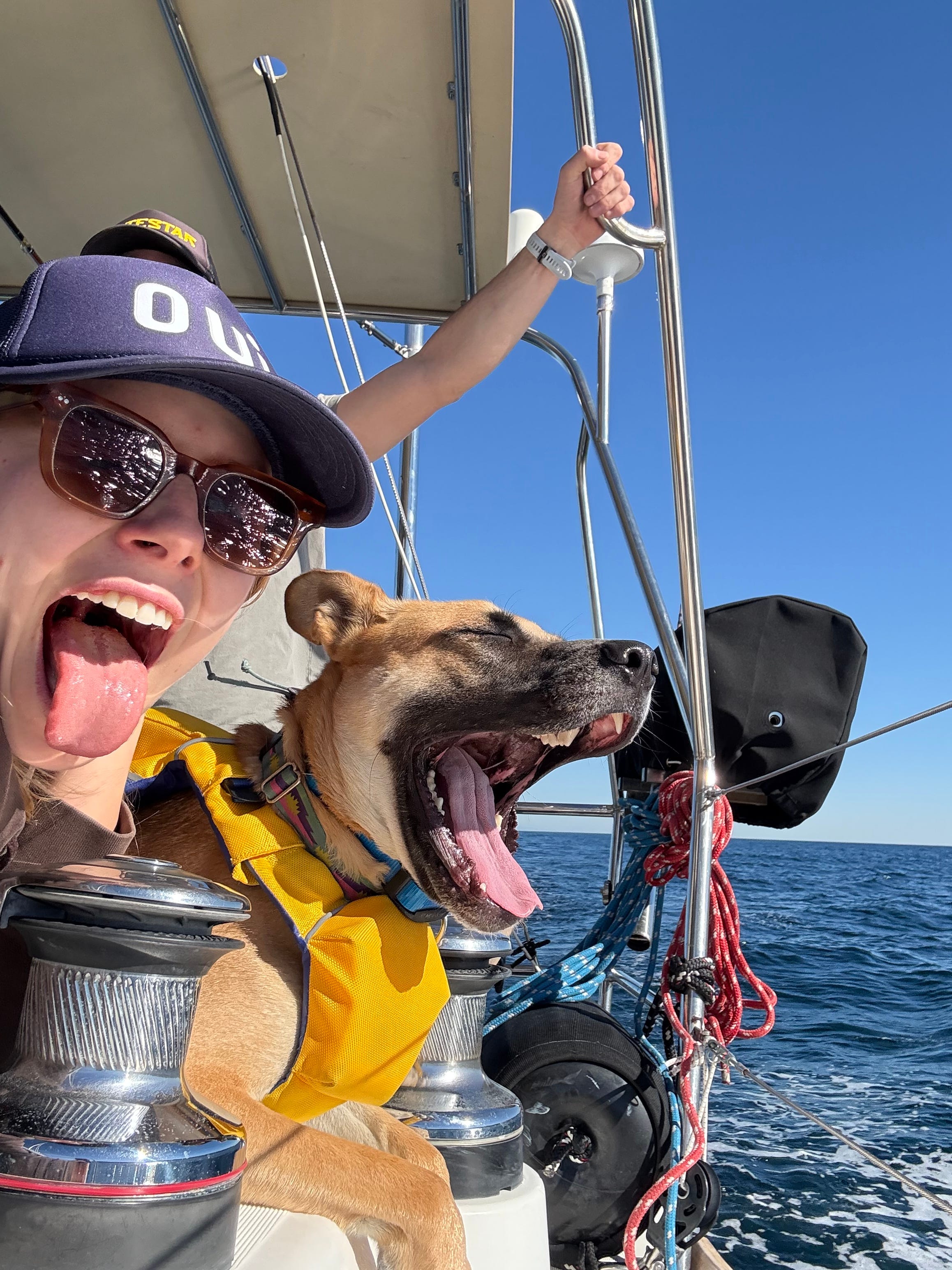
A few hours after crossing the border, while resting in the forward cabin as we made eight knots under sail, I got an email from the scholarship committee. My heart plummeted. If it was good news, they’d have called. My eyes zeroed in on the word “difficult.” Ouch. After a beat, the words arranged themselves into sentences. “I hope your sailing adventure is off to a great start. Normally, I would call to deliver the news, but I know that reaching you via phone would be difficult right now.” Oh. “I want to congratulate you…this is a unanimous and strong decision…” I started shouting and Boss started barking. Teddy thought something catastrophic was happening. I ran upstairs, opened another Pacifico, and sprayed it off the transom. The wind blew the sticky foam right back into the cockpit. Teddy was thrilled about the scholarship, but less so about the beer.
We stopped in Ensenada to clear customs. Teddy spent hours in the immigration office, copying his signature over and over, which had to match exactly the one he’d scribbled in his passport years before. I filled a backpack with raw meat at Costco. We thought we weren’t allowed to bring any across the border. No one checked. On the way back to the marina, I hit it off with the Uber driver. We both liked the same music, rock and electronic, and we sang along to Metallica when Nothing Else Matters came on. He told me that he was a standup comedian, and that comedy was a form of therapy for him after losing his daughter to leukemia when she was eleven. The language barrier only kicked in when he played me a video from one of his sets involving a talking caca. I couldn’t understand a word it said.
The real adventure was to begin the next day. No more marinas until Cabo. No more Ubers or enchiladas or supermarkets. We’d leave at three in the afternoon and, for the first time ever, sail into the night.
Stay tuned for part two!
There is so much laughter layered into the realities of a big adventure in this piece! I am leaving my job to be a lighthouse keeper for the summer with my friend and feel the same. You will never be fully ready. That’s why you gotta go. Thank you for sharing!
Yesssssss